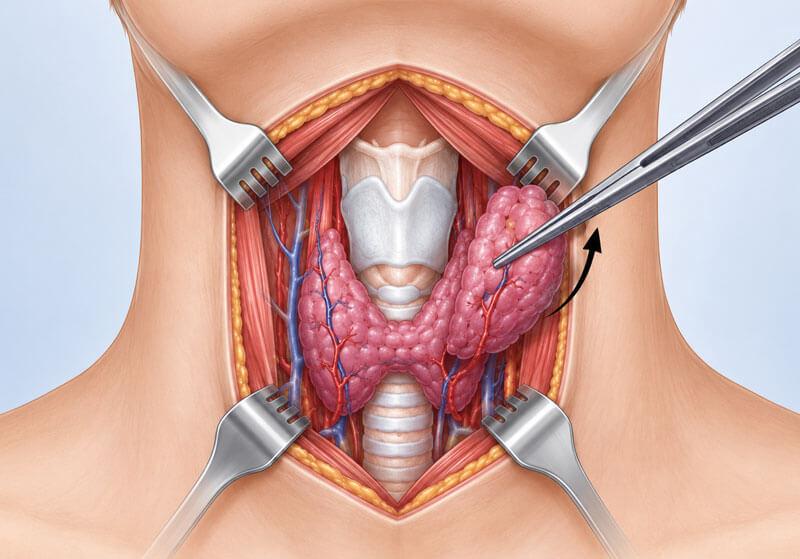
Thyroid Surgery is performed to treat various conditions affecting the thyroid gland, including thyroid nodules, goiter, hyperthyroidism, and thyroid cancer. The thyroid is a butterfly-shaped gland located in the front of the neck and plays a vital role in regulating metabolism, energy levels, body temperature, and hormone production. Surgical treatment aims to remove diseased thyroid tissue while preserving surrounding structures and maintaining optimal health.
Surgery may be advised when thyroid enlargement causes symptoms, when nodules raise concerns for cancer, or when medical treatment is not providing adequate control of thyroid disease. The decision is based on clinical findings, imaging studies, and laboratory investigations.
Thyroid disorders may present with a variety of symptoms depending on the size of the gland and its hormone activity. Some patients may have no symptoms and are diagnosed during routine examinations.
A detailed evaluation is carried out to understand the nature of the thyroid condition and determine the most suitable surgical approach. This assessment also helps identify any associated hormonal abnormalities and ensures patient safety during surgery.
The extent of surgery depends on the underlying condition. A hemithyroidectomy involves removing one lobe of the thyroid gland, while a total thyroidectomy removes the entire gland. In some situations, additional lymph node surgery may be required, particularly in cases of thyroid cancer.
The procedure is performed under general anesthesia, and every effort is made to preserve the nerves controlling the voice and the nearby parathyroid glands responsible for calcium regulation.
Thyroid surgery can effectively relieve symptoms caused by thyroid enlargement and provide definitive treatment for many thyroid disorders. It also allows accurate diagnosis through detailed examination of the removed tissue.
Following surgery, patients are monitored closely for recovery and thyroid hormone balance. Depending on the extent of surgery, thyroid hormone replacement medication may be required. Most patients experience gradual improvement in symptoms and are able to resume normal activities within a few weeks.
Regular follow-up appointments are important to monitor healing, evaluate hormone levels, and ensure optimal long-term outcomes. With appropriate care and monitoring, thyroid surgery is generally safe and highly effective in treating a wide range of thyroid conditions.