Ganglion Excision is a surgical procedure performed to remove a ganglion cyst, a fluid-filled swelling that commonly develops near joints or tendons. These cysts are most frequently seen around the wrist, hand, ankle, or foot. Although ganglion cysts are non-cancerous, they may cause pain, discomfort, restricted movement, or cosmetic concerns, making surgical removal an effective treatment option.
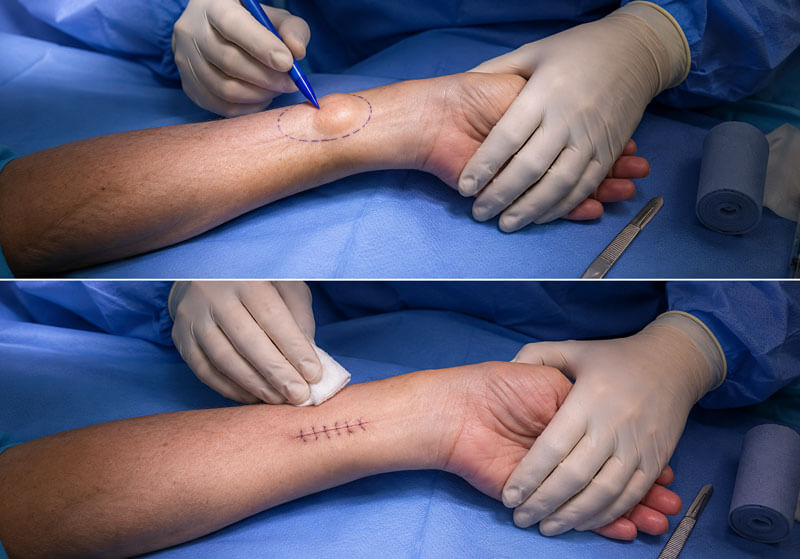
A ganglion cyst arises when fluid from a joint or tendon sheath collects and forms a sac-like swelling. The size of the cyst may fluctuate over time, and some cysts can become more noticeable during physical activity. While many ganglion cysts are painless, others may press on nearby nerves and cause symptoms.
The symptoms depend on the size and location of the cyst. Some individuals may notice only a visible lump, while others experience discomfort during movement or daily activities.
A thorough examination helps confirm the diagnosis and determine the most appropriate treatment plan. In addition to a physical examination, imaging studies may be recommended in selected cases to evaluate the cyst and surrounding structures.
Ganglion excision is typically performed as a day-care procedure under local, regional, or general anesthesia depending on the location and size of the cyst. During surgery, the cyst is carefully removed along with its stalk or connection to the joint or tendon sheath, helping reduce the likelihood of recurrence.
The incision is then closed with sutures, and a dressing is applied to protect the surgical site. Most patients are discharged on the same day.
Surgical excision is often recommended when conservative treatments have not provided lasting relief or when the cyst repeatedly returns. Removal can improve comfort, restore function, and eliminate the visible swelling.
Recovery following ganglion excision is generally smooth. Mild swelling, stiffness, or discomfort may occur temporarily and usually improves within a few weeks. Patients are encouraged to follow wound care instructions, attend follow-up appointments, and gradually return to normal activities as advised by their surgeon. Depending on the location of the cyst, hand or joint exercises may be recommended to restore full mobility.